For prospective students and their families, navigating the landscape of American universities can be a daunting task. With thousands of institutions, each with its own distinct character and academic philosophy, the search for the right fit is a significant undertaking. This guide provides a clear overview of ten leading universities, focusing on their unique strengths, campus culture, and defining attributes.
Understanding what these institutions prioritize in applicants goes beyond test scores and grades. It involves aligning a student’s aspirations with an institution’s core mission and community. The following exploration aims to demystify these elite environments and offer valuable perspective.
Evaluating Excellence: What Defines a Top-Tier Institution
When considering the top 10 universities in the USA, several consistent factors emerge. These elements contribute to their reputations and the transformative experiences they offer students.
Key Differentiators Among Leading Schools
Distinguishing between these prestigious American universities requires looking at specific pillars of excellence. A holistic evaluation provides the most accurate picture.
- Academic Rigor & Specialization: The depth of scholarly research and strength in specific disciplines.
- Faculty Distinction: Access to Nobel laureates, Pulitzer winners, and pioneering researchers.
- Campus Resources & Facilities: State-of-the-art laboratories, libraries, and artistic venues.
- Global Network & Alumni Success: The power and reach of the institution’s graduate community.
- Undergraduate Teaching Focus: The commitment to mentoring and classroom experience for bachelor’s students.
A Guide to Ten Distinguished American Universities
The following institutions represent a cross-section of the nation’s most respected centers of learning. Each has carved out a distinctive identity within the world of higher education.
1. Harvard University
Founded in 1636, Harvard stands as the oldest institution of higher learning in the United States. Its reputation for unparalleled resources and a vast alumni network is global. The university’s residential house system fosters a tight-knit community within a larger research powerhouse.
- Notable Strengths: Law, Business, Medicine, Government, and the Humanities.
- Campus Culture: Steeped in tradition yet dynamically intellectual, with an intense focus on leadership and impact.
- Defining Attribute: The Harvard name carries immense weight, offering unmatched access and opportunity across virtually every field.
2. Stanford University
The epicenter of Silicon Valley innovation, Stanford blends top-tier academics with an entrepreneurial spirit that is palpable on campus. Its sprawling, mission-style campus encourages collaboration between engineers, artists, and scientists.
- Notable Strengths: Computer Science, Engineering, Entrepreneurship, and Earth Sciences.
- Campus Culture: Forward-thinking, interdisciplinary, and optimistic, with a “can-do” attitude applied to global problems.
- Defining Attribute: Its symbiotic relationship with the tech industry, providing students with direct pathways to startups and major firms.
3. Massachusetts Institute of Technology (MIT)
MIT is synonymous with cutting-edge research and rigorous application of science and technology. The culture emphasizes “mens et manus” – mind and hand – valuing theoretical knowledge and practical problem-solving equally.
- Notable Strengths: Engineering, Physics, Computer Science, Economics, and Architecture.
- Campus Culture: Intensely collaborative, famously demanding, and driven by a passion for discovery and invention.
- Defining Attribute: A project-based learning environment where students are encouraged to tinker, build, and create from day one.
4. Princeton University
Princeton offers a distinctive focus on undergraduate education within a world-class research university. Its generous financial aid policy and commitment to a liberal arts core are hallmarks. The beautiful Gothic campus provides a classic collegiate atmosphere.
- Notable Strengths: Public and International Affairs, Mathematics, Physics, and Philosophy.
- Campus Culture: Scholarly, intimate, and tradition-rich, with a strong emphasis on independent work culminating in a senior thesis.
- Defining Attribute: The senior thesis requirement, which engages every undergraduate in a year-long, original research project under faculty mentorship.
5. Yale University
Yale is celebrated for its excellence in the humanities and arts, alongside powerful professional schools. The residential college system, modeled after Oxford and Cambridge, creates distinct social and academic communities for undergraduates.
- Notable Strengths: Law, Drama, History, English, and Music.
- Campus Culture: Intellectually vibrant with a strong sense of history and community, fostering deep engagement in the arts and public service.
- Defining Attribute: The world-renowned Yale University Art Gallery and Yale Repertory Theatre, offering students direct access to premier artistic institutions.
6. University of Chicago
Known for its intense intellectualism and the famed Core Curriculum, UChicago challenges students to engage with foundational texts and ideas. Debate and rigorous inquiry are the cornerstones of campus life in its Gothic Hyde Park setting.
- Notable Strengths: Economics, Sociology, Political Science, Physics, and Law.
- Campus Culture: Argumentative, bookish, and proudly unconventional, where the life of the mind is paramount.
- Defining Attribute: The Common Core, a set of required courses that ensures all undergraduates grapple with fundamental questions across disciplines.
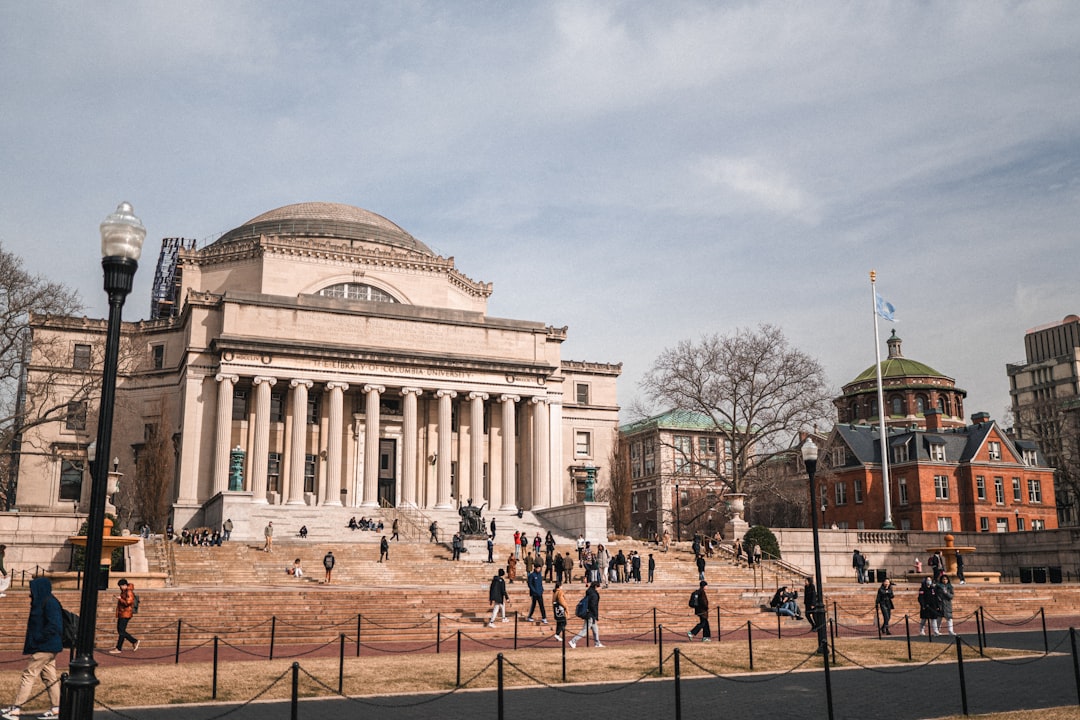
7. Columbia University
Columbia offers the quintessential Ivy League experience in the heart of New York City. Its Core Curriculum provides a shared foundation in great works of literature, philosophy, and history, while the city itself serves as an extended campus.
- Notable Strengths: Journalism, Business, International Relations, and the Arts.
- Campus Culture: Fast-paced, globally oriented, and intellectually diverse, leveraging its urban setting for internships and cultural enrichment.
- Defining Attribute: The unparalleled access to the opportunities, institutions, and networks of New York City across every industry.
8. California Institute of Technology (Caltech)
Caltech is a small, intensely focused institution dedicated to science and engineering. With an exceptionally low student-to-faculty ratio, it offers an intimate, collaborative environment for some of the world’s most promising young scientists.
- Notable Strengths: Physics, Chemistry, Astronomy, Geology, and Engineering.
- Campus Culture: Highly collaborative, quirky, and dedicated almost exclusively to STEM, with a strong honor code governing student life.
- Defining Attribute: Its sheer concentration of scientific brilliance and its management of NASA’s Jet Propulsion Laboratory.
9. University of Pennsylvania
Founded by Benjamin Franklin, Penn emphasizes the integration of knowledge for practical benefit – “theory into practice.” Its undergraduate schools, particularly the Wharton School of Business, are deeply interconnected.
- Notable Strengths: Business, Nursing, Communications, and Law.
- Campus Culture: Energetic, pre-professional, and interdisciplinary, with a strong focus on applying classroom learning to real-world challenges.
- Defining Attribute: The “One University” policy that encourages students to take courses across its four undergraduate schools, fostering a cross-disciplinary mindset.
10. Duke University
Duke combines stellar academics with a renowned athletic program and a vibrant campus spirit in Durham, North Carolina. Its research power is formidable, particularly in medicine and public policy, while its undergraduate experience is known for being collaborative.
- Notable Strengths: Medicine, Public Policy, Environmental Science, and Law.
- Campus Culture: Energetic, collaborative, and spirited, with a unique blend of Southern charm, academic intensity, and Blue Devil pride.
- Defining Attribute: The Duke University Health System and the Sanford School of Public Policy, which provide exceptional research and practical opportunities for undergraduates.
Finding Your Institutional Match
This survey of top American universities reveals that prestige alone is an insufficient guide. The right fit is about resonance with an institution’s core identity. A student who thrives in a collaborative, project-based environment may look very different from one who seeks a tradition of intense philosophical debate.
The most successful applicants demonstrate not just academic prowess, but a clear understanding of how their goals align with a university’s specific offerings and culture. They can articulate why a particular campus, with its unique blend of strengths and community, is the ideal place for their intellectual and personal development.
Ultimately, navigating the selection process for the nation’s leading institutions requires moving beyond rankings. It demands a deeper inquiry into the academic environment, campus ethos, and unique opportunities that will best nurture a student’s ambitions and growth over four formative years.

Leave a Reply